Why air filter timing matters
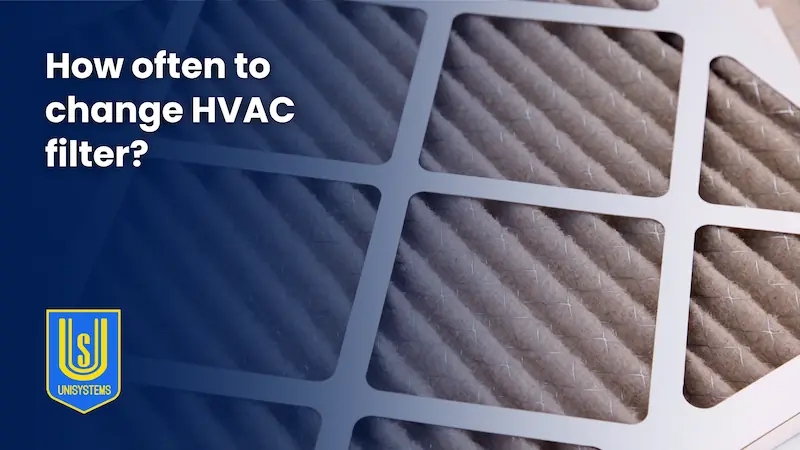
Your HVAC filter plays a bigger role than many homeowners realize. It helps capture dust, debris, pet hair, and other particles before they move through your HVAC system. When the filter is clean, air can move more freely, your equipment can operate with less strain, and your home can feel more comfortable.
As a general starting point, many standard filters should be checked every month and changed every one to three months. However, that is only a guideline. The right schedule depends on your home, your equipment, your indoor air quality concerns, and how much dust or activity is present in the space.
At Unisystems HVAC, we often remind customers that filter care is simple, but it should not be treated as an afterthought. A small part can have a major effect on comfort, efficiency, and system reliability.
What affects filter replacement
No two homes are exactly the same, so filter replacement timing can vary. A quiet home with one or two occupants may not need a change as often as a busy household with children, pets, frequent visitors, or renovation dust. If you have dogs or cats, filters may clog faster because pet hair and dander can collect quickly.
The age and condition of your HVAC system also matter. Older equipment may be more sensitive to restricted air flow, especially if there are existing performance concerns. Duct condition can also affect how much dust enters the system and circulates through the home.
Seasonal usage is another factor. During very hot or cold months, your HVAC equipment may run for longer periods. More run time means more air passing through the filter, which can cause it to load with dust sooner. If your furnace or cooling equipment is working daily, it is smart to check the filter more often.
How filter type changes the schedule
Filter type makes a significant difference. Basic fiberglass filters are often less dense and may need to be changed more frequently. Pleated filters usually capture more particles and may last longer, depending on the product and the conditions in your home.
Some homeowners use disposable air filters because they are convenient and easy to replace. Others may have washable filters, which require proper cleaning and full drying before they are put back in place. Using the wrong filter or installing it incorrectly can reduce air flow and create problems for the HVAC system.
It is important to remember that a thicker or higher rated filter is not always better for every unit. Some systems are not designed to handle certain filters. If the filter is too restrictive, it can make the blower work harder, reduce efficiency, and cause uneven comfort. That is why professional guidance from Unisystems HVAC is helpful when choosing filters for your specific equipment.
MERV rating and indoor air quality
The merv rating tells you how effectively a filter captures particles of different sizes. A higher merv filter may collect more fine particles, which can support better indoor air quality. However, higher filtration can also restrict air movement if the HVAC system is not designed for it.
This is where many homeowners get confused. They want cleaner air, which is understandable, but they may not know whether their equipment can handle the filter they selected. A filter that looks like an upgrade can create stress on the system if it limits air flow too much.
Indoor air quality is about more than just one filter. Humidity, ventilation, duct cleanliness, equipment condition, and household habits all play a part. If you are concerned about allergies, dust buildup, stale air, or uneven comfort, Unisystems HVAC can inspect your system and help you understand which solutions may be appropriate without guessing.
Signs your home needs a fresh filter
There are several signs that it may be time to change your air filter. If you notice more dust around vents, weaker air from registers, longer heating or cooling cycles, or higher energy use, the filter may be part of the issue. A dirty filter can make your HVAC system work harder than necessary, which may lead to avoidable wear.
You may also notice that rooms feel stuffy or that air quality seems worse than usual. In some cases, the equipment may make unusual sounds because it is struggling to move air properly. If the filter looks gray, packed with debris, or visibly clogged, it should be replaced.
Furnace filters should be checked before and during heating season, especially if the system has been sitting unused for part of the year. The same idea applies before cooling season. A clean filter gives your equipment a better chance to start the season with proper air flow.
Filter maintenance is one of the easiest homeowner tasks, but it does not replace professional HVAC service. Filters protect the system, but they cannot correct worn parts, refrigerant concerns, electrical issues, clogged drains, or duct problems.
When to call Unisystems HVAC
If you are changing filters often and they become dirty very quickly, that may point to another issue in the home or HVAC system. Excessive dust, poor return air setup, duct leaks, construction debris, or equipment concerns can all contribute. Rather than continuing to replace filters without knowing why, it is wise to schedule an expert evaluation.
Unisystems HVAC provides professional maintenance, repair, and system inspections to help homeowners protect comfort and equipment life. During a service visit, our technicians can review air flow, check key components, look for signs of strain, and help you understand whether your current filter choice makes sense.
We do not believe in giving every home the same answer. Your filter schedule should fit your equipment, your lifestyle, and your air quality goals. If you are unsure what filter to use or how often to change it, Unisystems HVAC can help you make a practical plan.
A clean filter is a simple step, but expert care is what keeps your HVAC system performing at its best. Contact Unisystems HVAC to schedule maintenance or ask about the best filter strategy for your home.