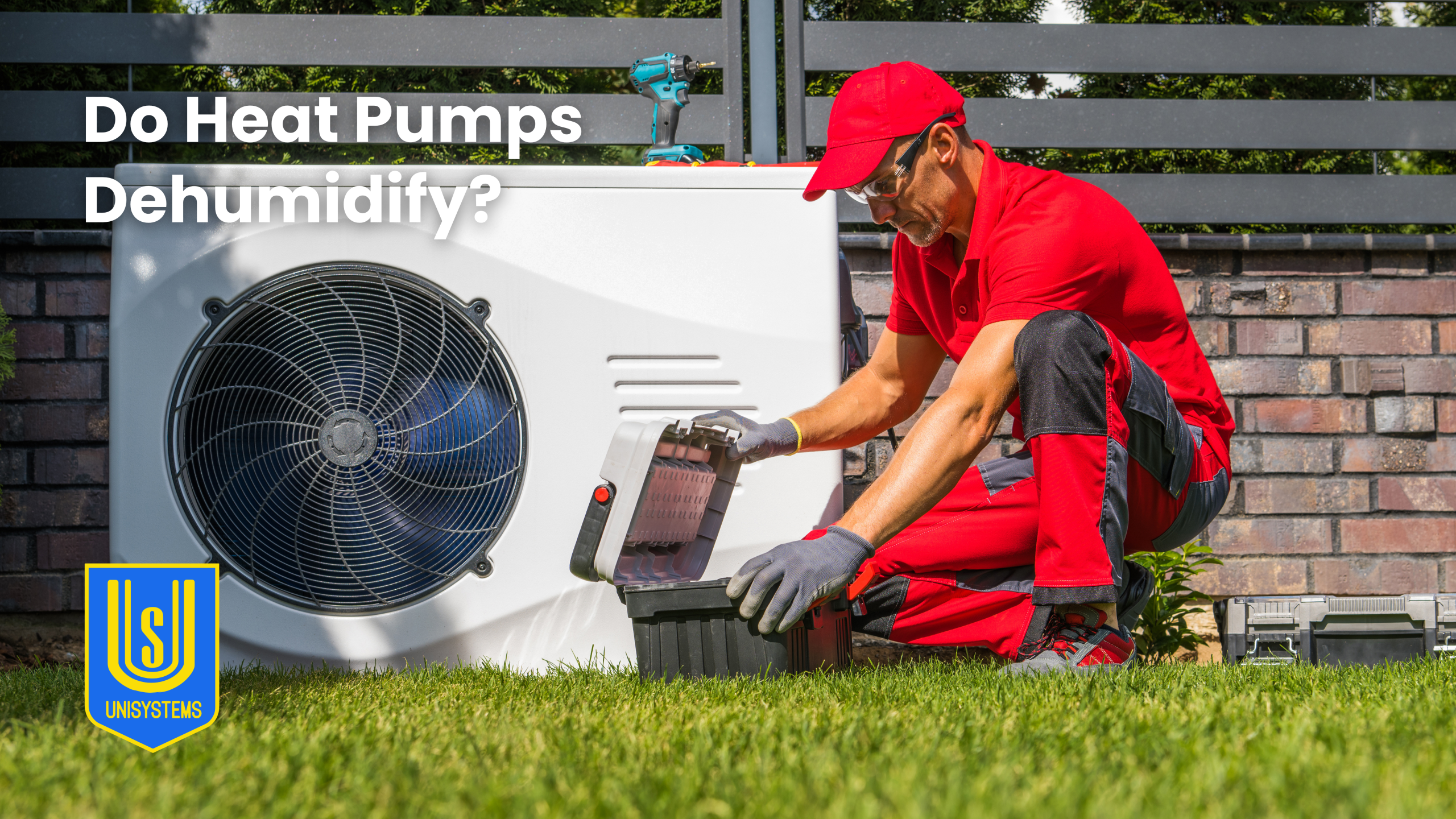
A comfortable home is not just about the temperature on the thermostat. The air can feel off even when the numbers look perfect, and humidity is often the hidden culprit. This leads many homeowners to ask: Do heat pumps dehumidify, or are they only designed to heat and cool?
The short answer is yes, heat pumps can help with humidity control, but how effectively they dehumidify depends on the system, operating mode, indoor conditions, and equipment capacity. Unlike a standalone dehumidifier, a heat pump generally removes moisture as part of its cooling operation rather than focusing exclusively on lowering humidity.
Understanding how this process works can help you choose the right system and use it more effectively. With professional guidance from Unisystems, homeowners can better understand the relationship between heating, cooling, air humidity, and indoor comfort.
Do Heat Pumps Dehumidify Indoor Air?
When people ask, do heat pumps dehumidify, they are usually wondering whether a heat pump can remove moisture from the air. In many situations, it can.
During cooling, a heat pump works similarly to an air conditioner. Warm indoor air passes over a cold indoor coil. As the air cools, moisture can condense on the coil and drain away. This process naturally reduces indoor humidity levels.
However, there is an important distinction. A heat pump does not operate as a dedicated dehumidifier all the time. Its primary purpose is heating and cooling. The amount of moisture removed depends on factors such as the system’s capacity, runtime, indoor humidity, airflow, and operating mode.
This means a heat pump can also dehumidify while providing cooling, but homeowners should not assume every system will provide the same level of humidity control.
How a Heat Pump Removes Moisture
The dehumidification process is closely connected to cooling. When humid air enters the indoor unit, the system moves that air across a cold evaporator coil. If the coil temperature is below the air’s dew point, water vapor condenses into liquid water.
That moisture collects on the coil and flows into a drain system. The remaining air is cooler and contains less moisture than before.
This process is one reason a properly sized heat pump can improve comfort during warm, humid weather. Instead of simply lowering the temperature, the system can help reduce the amount of moisture circulating throughout the indoor space.
The result can be air that feels more comfortable without requiring the thermostat to be set extremely low.
Heat Pumps, Heating, and Winter Humidity
Humidity control works differently during winter heating. When a heat pump operates in heating mode, it generally does not remove indoor moisture as it does during cooling.
In fact, heating indoor air can make relative humidity appear lower because warmer air can hold more moisture. If a home already has relatively dry air, continuous heating may make that dryness more noticeable.
This is why homeowners should not expect a heat pump to dehumidify during winter simply because it is running.
If winter air becomes excessively dry, a whole-home humidifier may be more appropriate. If indoor humidity remains high despite heating, there may be another source of moisture, such as poor ventilation, leaks, or excessive moisture generation indoors.
Unisystems can help homeowners understand how their heat pump operates year-round and determine whether additional humidity solutions may be useful.
Can Heat Pumps Help Reduce Humidity?
Yes, heat pumps can help reduce humidity, especially when they are operating in cooling mode. The effectiveness depends heavily on system design and operating conditions.
A system with too much capacity for the home may cool the space very quickly and shut off before removing enough moisture. A properly matched system can run for longer periods, giving the indoor coil more time to collect condensation.
Several factors influence moisture removal:
- System capacity and sizing
- Indoor temperature and humidity levels
- Outdoor weather conditions
- Airflow across the indoor coil
- Thermostat settings
- Equipment condition and maintenance
- Selected operating mode
- Home insulation and air leakage
This is why simply installing a larger heat pump is not necessarily the best approach to humidity control. Proper sizing and installation matter.
What Is Dry Mode on a Heat Pump?
Some heat pumps offer a dry mode or dehumidification mode specifically designed to prioritize moisture removal. The exact operation varies by manufacturer and model, but the basic concept is to allow the system to focus more on reducing humidity than aggressively lowering the indoor temperature.
In dry mode, the heat pump may adjust the compressor operation and the indoor fan speed to promote greater condensation on the indoor coil. This can be particularly helpful when the home feels damp but is already close to the desired temperature.
Some advanced systems may also offer enhanced dehumidification features that provide more precise humidity control.
Not every heat pump has the same capabilities, so homeowners should check the manufacturer’s specifications or consult a qualified HVAC professional before relying on this feature.
Heat Pump vs. Dehumidifiers for Humidity Control
A heat pump and a dedicated dehumidifier can both influence indoor humidity, but they serve different primary purposes.
A heat pump is designed to provide heating and cooling while removing some moisture during cooling. A dehumidifier is designed specifically to extract moisture from the air.
For homes with persistent humidity problems, a standalone or whole-home dehumidifier may provide more direct control. This can be especially useful when moisture levels remain high even when little cooling is needed.
There are also situations where homeowners may believe they have a heat pump problem when the real issue is excessive moisture entering the home. Improving ventilation, sealing air leaks, addressing plumbing problems, or controlling other moisture sources may be necessary.
A professional assessment can determine whether the existing heat pump can meet the home’s needs or whether additional equipment would be beneficial.
Why Proper Heat Pump Capacity Matters
The capacity of a heat pump affects both temperature control and dehumidification. An oversized system may reach the thermostat setting quickly, resulting in shorter cooling cycles. While the home may become cooler, those short cycles can limit the amount of moisture removed from the air.
An undersized system has a different problem. It may run continuously but struggle to maintain the desired temperature during periods of extreme heat.
The goal is balanced performance. A correctly selected heat pump should provide effective heat, reliable cooling, reasonable energy use, and appropriate indoor humidity control.
Professional installation is therefore about more than connecting equipment. It involves evaluating the home’s size, layout, insulation, windows, airflow, and comfort requirements.
Unisystems approaches heat pump installation with these factors in mind, helping homeowners select equipment that supports dependable year-round conditioning.
When Heat Pumps May Not Dehumidify Enough
Although heat pumps can remove moisture, there are circumstances in which they do not dehumidify your home enough to maintain comfortable humidity levels.
For example, if the cooling load is low but moisture levels are high, the heat pump may not run long enough to remove sufficient water vapor. A home with poor ventilation or significant air leakage may also experience ongoing humidity problems.
Other warning signs include:
- Persistent condensation on windows
- Musty indoor odors
- Rooms that feel damp or clammy
- Frequently elevated humidity readings
- Visible moisture around certain areas
- Uneven comfort between rooms
These conditions do not automatically mean the heat pump is defective. The cause may involve building conditions, airflow, equipment sizing, or another moisture source.
Unisystems can evaluate the overall HVAC setup and help identify practical options for improving comfort.
Better Indoor Humidity Control With the Right System
Good humidity control begins with understanding how your HVAC equipment actually operates. A heat pump can provide meaningful dehumidification during cooling, but it is not always a substitute for dedicated dehumidification equipment.
Homeowners should also pay attention to maintenance. Dirty filters, restricted airflow, clogged condensate drains, or neglected coils can affect system performance. Regular HVAC services can help keep equipment operating efficiently and support consistent indoor comfort.
Smart thermostats and compatible humidity controls can provide another layer of convenience. Depending on the equipment, these controls may allow homeowners to monitor humidity and select appropriate operating modes.
The right combination of equipment, installation, maintenance, and settings can make a noticeable difference in how the indoor environment feels.
Get Year-Round Comfort With Unisystems
Comfort should feel balanced, not simply colder or warmer. If you are wondering do heat pumps dehumidify or whether your current system is providing enough humidity control, professional advice can help you find the answer.
Unisystems provides HVAC expertise to help homeowners understand their heat pump options, improve heating and cooling performance, and address indoor humidity concerns. Whether you need installation, maintenance, troubleshooting, or guidance on dehumidification solutions, choosing the right approach can make your indoor environment more comfortable and energy-conscious.
Do not let hidden humidity undermine your comfort. Contact Unisystems today to explore practical heat pump and humidity-control solutions tailored to your home’s needs.