When one system can help keep your home comfortable through both a chilly winter morning and a hot summer afternoon, year-round comfort becomes much easier to achieve. If you are considering a ductless HVAC option, you may be asking, does a mini split heat and cool? The answer is yes. Many modern mini splits are designed to provide both heating and cooling, making them a versatile choice for homeowners and businesses.
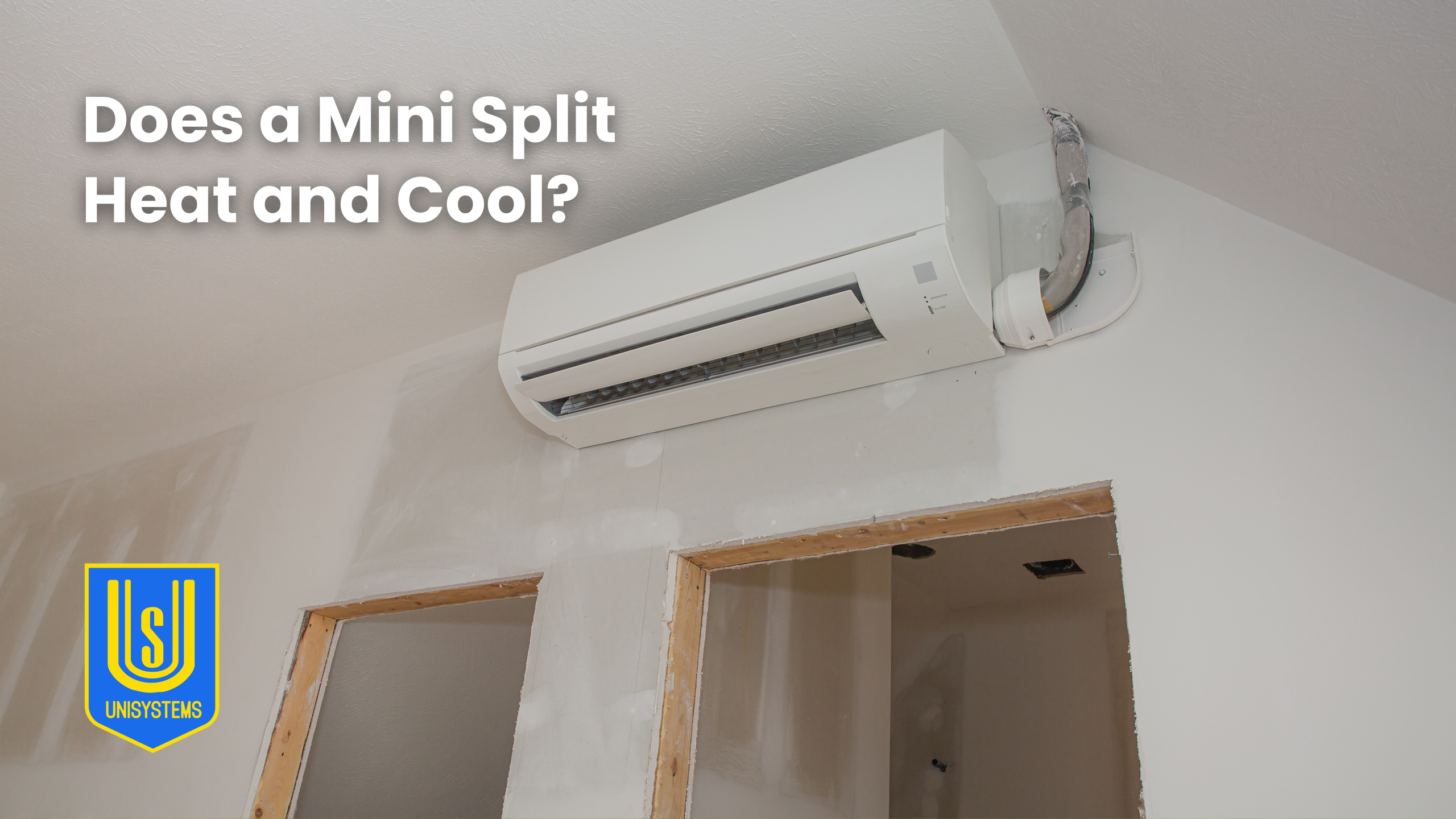
Unlike traditional HVAC systems that rely on extensive ductwork, a ductless mini-split uses indoor air-handling units connected to an outdoor unit. This setup provides targeted temperature control while giving homeowners more flexibility in managing comfort throughout the house.
For homeowners exploring efficient heating and air conditioning solutions, Unisystems can help explain how these systems work and whether they are suitable for a particular property.
Does a Mini Split Heat and Cool?
Yes, many mini splits can both heat and cool. The key component that makes this possible is a heat pump. During warm weather, the system removes heat from indoor air and transfers it outdoors, allowing cooled air to circulate inside. During colder weather, the process reverses, allowing the system to extract available heat from outdoor air and move it indoors.
This dual-purpose operation means one system can act as an air conditioner in summer and a heating system in winter. Instead of installing separate equipment for cooling and heating, homeowners can use one integrated system for both purposes.
However, not every mini split has identical capabilities. When choosing equipment, check whether the specific model offers both heating and cooling and whether its capacity fits your home.
How a Ductless Mini-Split Provides Year-Round Comfort
A ductless mini-split works differently from a traditional central air system. Rather than pushing conditioned air through a network of ducts, it delivers air directly through indoor units installed in selected rooms or zones.
This ductless air approach can be particularly useful for homes without existing ductwork. It can also provide more control over individual areas because different indoor units may be operated according to the needs of each space.
During cooling operation, the indoor unit absorbs heat from the room and sends it outside. During heating operation, the heat pump reverses the refrigerant cycle and brings heat indoors.
Unisystems can help homeowners understand how a ductless system fits into their existing heating and cooling setup before installation.
Can a Ductless Air System Replace an Air Conditioner?
In many situations, a mini split can serve as the primary air conditioning system. Its ability to cool individual rooms or zones can make it a practical alternative to conventional AC units.
For example, a home addition, finished garage, bedroom, or home office may not have access to the existing ductwork. Installing a ductless mini system in that area can provide dedicated cooling without requiring major duct modifications.
Mini splits may also be used throughout an entire house when the system is properly designed and sized. The right approach depends on the home’s layout, insulation, climate, and comfort requirements.
Rather than assuming every property needs the same solution, Unisystems can evaluate the space and help determine whether a ductless system is an appropriate choice.
What Happens When a Mini Split Provides Supplemental Cooling?
A mini split does not always have to replace an existing HVAC system. It can also provide supplemental cooling in areas that become particularly warm.
For instance, an upstairs bedroom may receive more heat than other parts of the house, or a sun-facing room may become uncomfortable during summer. Adding a mini split to that space can provide targeted cooling without changing the entire central HVAC system.
Supplemental cooling can also be useful in home offices, converted spaces, workshops, and additions. Instead of cooling the entire house simply to make one room comfortable, homeowners can direct conditioned air where it is needed most.
This targeted approach gives mini splits considerable flexibility, especially when comfort requirements vary from room to room.
How Does a Ductless Mini Heat a Home?
The heating process is one of the most useful features of a heat-pump mini split. When the system is operating in heating mode, it does not simply create heat in the same way as a conventional electric heater. Instead, it transfers available heat from outdoor air into the home.
Even when outdoor temperatures feel cold, there is still some heat energy available in the air. The heat pump captures that energy and transfers it indoors through the refrigerant cycle.
The indoor unit then distributes warm air throughout the room. This can provide comfortable heating without requiring a traditional furnace in every area.
However, performance can vary depending on outdoor temperatures and the specific equipment. Proper sizing and professional installation are important for reliable split heat performance.
Why Energy Efficiency Matters With Mini Splits
Energy use is an important consideration when selecting a heating and cooling system. Mini splits can offer efficient operation because they provide conditioned air directly to the spaces that need it.
Traditional systems may lose some conditioned air through ductwork, particularly when ducts are located in unconditioned areas. A ductless system avoids much of this duct-related distribution because the indoor unit delivers air directly into the room.
Another advantage is zoning. Instead of maintaining the same temperature throughout the entire house, homeowners can adjust individual areas based on occupancy and comfort preferences.
That does not automatically mean every mini split will use less energy in every situation. Efficiency depends on equipment ratings, installation quality, weather conditions, settings, and how the system is used.
Unisystems can help homeowners compare available options and choose a system designed around the property’s specific energy and comfort needs.
Where Can Mini Splits Be Used?
The flexibility of a mini split makes it suitable for more than just bedrooms and living rooms. You can consider these systems for many residential and light commercial spaces.
Common applications include:
- Bedrooms and living areas that need independent temperature control
- Home offices where consistent comfort is important
- Room additions without existing ductwork
- Finished garages or converted spaces
- Smaller offices and individual commercial areas
Because the indoor units can be installed in specific locations, homeowners have greater flexibility when planning their comfort system.
A professional assessment is still important. Factors such as room size, insulation, windows, ceiling height, and existing HVAC equipment can affect the required capacity and placement.
Are Mini Splits a Good Choice for Your Home?
Whether a mini split is the right option depends on your property’s needs. A home with no ductwork may benefit significantly from a ductless system, while another property may be better served by a combination of existing HVAC equipment and targeted mini splits.
Homeowners should consider several factors before deciding. These include the number of rooms requiring heating or cooling, installation locations, equipment capacity, operating costs, and the desired level of zoning control.
Also avoid selecting an oversized or undersized unit just because it looks more powerful or affordable. An improperly sized conditioner or heat pump may not provide the comfort or efficiency expected.
Professional installation can make a major difference because proper refrigerant connections, electrical work, airflow, drainage, and equipment placement all affect system performance.
Get Reliable Heating and Cooling Guidance From Unisystems
The question “does a mini split heat and cool?” has a simple answer, but choosing the right system requires a closer look at your property. A properly selected ductless system can provide both cooling and heating, offer room-by-room comfort, and work well in spaces where traditional ductwork is difficult to install.
Whether you need a primary HVAC solution, additional cooling, or a more flexible way to heat a specific area, Unisystems can help you explore your options. With the right equipment and professional installation, your heating and air conditioning system can provide dependable comfort through changing seasons.
Ready to make your home more comfortable year-round? Contact Unisystems today to discuss your heating and cooling needs and discover whether a mini split is the right fit for your space.