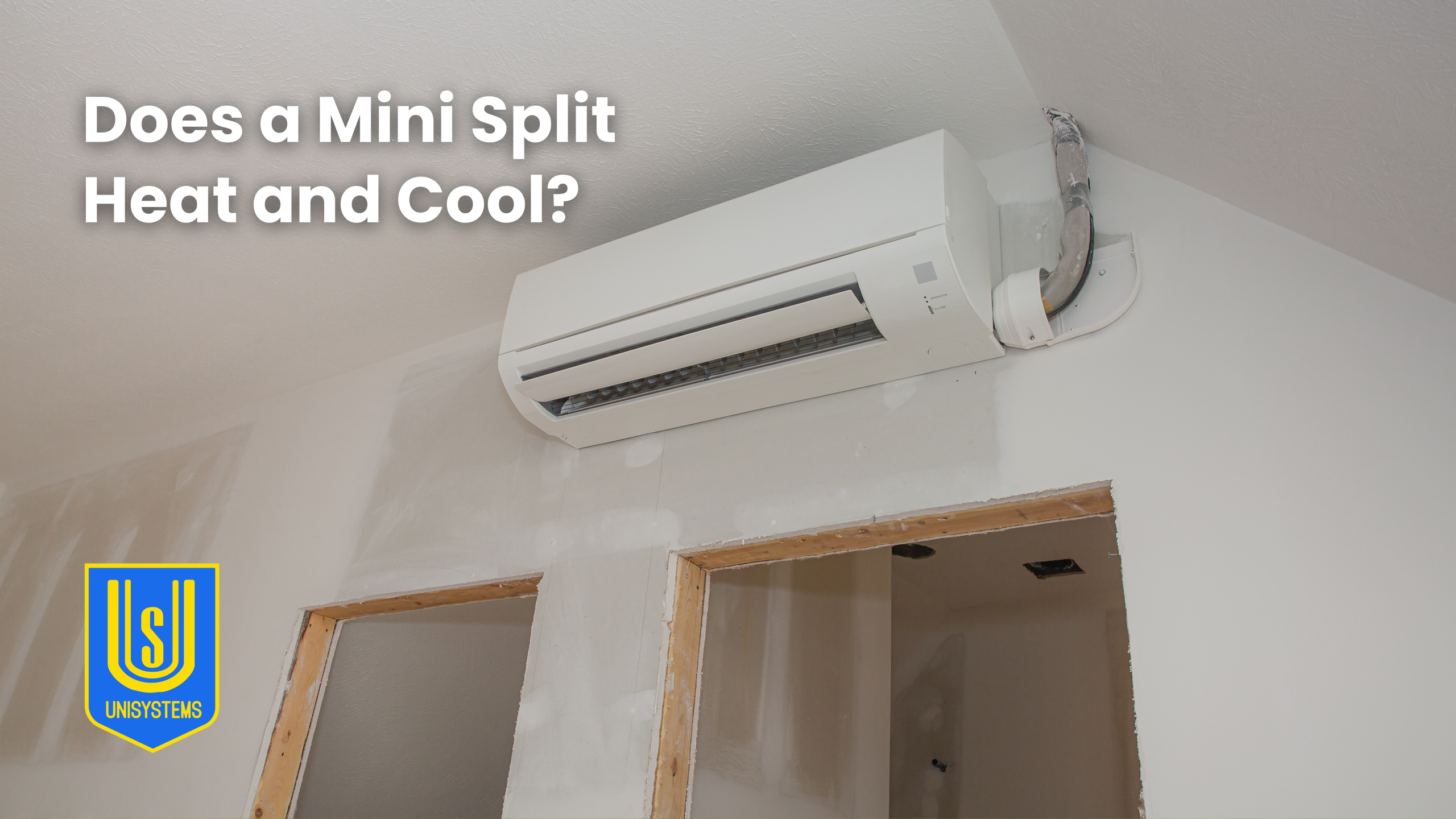

When your mini split suddenly displays “DF,” it can look like a warning that something has gone wrong. However, in most cases, you don’t need to panic. DF usually means “Defrost,” a normal function that helps a heat pump mini split keep working efficiently in cold weather.
Understanding what DF means on a mini split can help homeowners tell the difference between a normal operating cycle and a real problem. Unisystems helps homeowners understand their heating and cooling systems so they can make informed decisions about maintenance, repairs, and service.
What Does DF Mean on a Mini Split?
The DF code on a mini split generally stands for defrost. When the system operates in heating mode during cold or damp weather, frost can gradually form on the outdoor coil. If too much frost builds up, it can restrict airflow and reduce the system’s ability to transfer heat.
The defrost function temporarily changes how the system operates to warm the outdoor coil and remove accumulated frost. During this process, the indoor unit may stop producing warm air briefly. This can seem unusual, but it is typically part of normal heat pump operation.
The exact display and behavior can vary by manufacturer and model. Still, the basic purpose remains the same: the system protects itself and maintains efficient heating performance.
How the Outdoor Unit Handles Defrost
The outdoor unit plays an important role when a mini-split enters a defrost cycle. In heating mode, the outdoor coil absorbs heat from outside air. When outdoor temperature and humidity conditions are right, frost may develop on the coil.
Once the system determines that frost needs to be removed, it activates its defrost process. The system temporarily adjusts refrigerant flow so heat can reach the outdoor coil. As the coil warms, frost and ice begin to melt.
Homeowners may notice water dripping beneath the outdoor unit during this process. In cold weather, they may also see steam or vapor rising from the unit. These can be normal signs that the defrost cycle is working.
Unisystems can help homeowners understand normal mini split behavior and identify when unusual operation may require professional attention.
Why Does a Mini Split Need Defrost Cycles?
A heat pump depends on the outdoor coil to exchange heat with the surrounding air. Frost acts as an insulating layer, making that process less effective. If the frost remains, the system may have to work harder while delivering less heating performance.
Defrost cycles help prevent this buildup from becoming a larger problem. The system uses sensors and programmed controls to determine when it needs a defrost cycle.
Several conditions can influence how often defrost occurs, including:
- Outdoor temperature and humidity
- Amount of frost on the outdoor coil
- System operating time
- Coil temperature
- Refrigerant and airflow conditions
- The manufacturer’s defrost programming
A properly functioning system should automatically return to heating mode after the defrost process is complete.
What Happens Inside the System During Defrost?
During a defrost cycle, the mini-split temporarily changes its normal heating operation. The system may redirect refrigerant flow so the outdoor coil becomes warmer. This helps melt frost that has collected on the coil.
A temperature sensor helps the system monitor conditions and determine whether additional defrosting is necessary. Depending on the equipment, other controls may also help determine when the process should begin and end.
The indoor fan may slow down or stop temporarily to prevent homeowners from receiving an uncomfortable blast of cool air. Some systems may also display DF on the indoor unit while the process is active.
This temporary change is usually intentional. It is part of the system’s built-in protection strategy, not an indication that the entire mini split has failed.
Is Cool Air During Defrost Normal?
One common concern is noticing cool or less-warm air while the mini-split displays DF. In many cases, this is completely normal.
Because the system is temporarily focused on warming the outdoor coil, indoor heating performance can change for a short period. Many mini-split systems reduce or stop indoor airflow during this time.
Once the frost clears, the system should return to normal heating operation. The indoor unit should then resume providing warm air according to the thermostat or remote-control settings.
If the system repeatedly stays in defrost for unusually long periods, however, or fails to return to normal heating, that may point to an underlying issue. A professional evaluation can help determine whether the problem involves a sensor, refrigerant, airflow, or another component.
When DF May Point to a Problem
DF by itself usually isn’t a reason to schedule an emergency repair. The more important question is how the system behaves before, during, and after the defrost cycle.
Problems may become more likely when the system shows DF unusually often, remains in defrost for extended periods, or struggles to provide adequate heating afterward.
Possible causes of abnormal defrost behavior include a faulty temperature sensor, restricted airflow, excessive ice accumulation, refrigerant issues, or a control system problem. A sensor error may also prevent the system from determining the correct coil temperature.
Homeowners should avoid removing heavy ice with sharp tools or forcing components to operate. Damaging the outdoor coil can lead to more expensive repairs.
Unisystems can inspect the system when normal defrost behavior becomes inconsistent or when additional symptoms appear.
DF, Error Codes, and Sensor Issues
Not every code displayed by a mini split means the same thing. Manufacturers use different error codes to identify specific operating conditions or component problems.
DF is generally an operating status associated with defrost, while other codes may indicate a communication problem, sensor error, refrigerant-related issue, or electrical fault. The exact meaning depends on the specific model.
If DF appears briefly and disappears after the system completes defrost, that is usually expected. If DF remains on the display while the system stops functioning correctly, checking the manufacturer’s documentation can provide useful information.
A professional technician can also inspect the sensor, outdoor coil, wiring, control board, and other components when the system does not behave normally.
How Homeowners Can Support Efficient Mini Split Heating
Regular care can help your mini split perform efficiently throughout the heating season. Keep the indoor and outdoor areas around the equipment clear of unnecessary obstructions. Leaves, debris, snow, and other materials can interfere with airflow around the outdoor unit.
Clean indoor filters according to the manufacturer’s recommendations. A dirty filter can restrict airflow and make the system work harder.
Also avoid blocking the indoor unit with furniture or other objects. Good airflow allows the system to distribute conditioned air more effectively throughout the zone.
If you notice persistent frost, repeated error messages, weak heating, unusual sounds, or a mini split that never seems to complete its defrost cycles, professional service may be appropriate. Unisystems can help identify the cause and determine whether cleaning, adjustment, repair, or component replacement is needed.
When Should You Call a Mini Split Professional?
A brief DF display during cold-weather heating is normally not something homeowners need to worry about. The defrost function helps the system remove frost and protect its heating performance.
Professional attention becomes more important when symptoms continue after the defrost cycle ends. For example, the system may produce little or no heat, develop heavy ice around the outdoor unit, repeatedly enter defrost, or display additional error codes.
A technician can evaluate the entire system instead of focusing only on the code. This may include checking the outdoor coil, temperature readings, sensors, airflow, refrigerant conditions, and system controls.
Rather than guessing what an unfamiliar code means, homeowners can rely on a proper inspection to determine whether the mini split is operating as designed.
Keep Your Mini Split Working With Confidence
A DF message can look alarming at first, but understanding what DF means on a mini split makes the situation much clearer. In most cases, DF simply indicates that the system is running a defrost cycle to remove frost from the outdoor coil and maintain reliable heating.
A little knowledge can go a long way toward preventing unnecessary concern. If your system’s defrost behavior seems unusual or you are experiencing ongoing heating problems, Unisystems is ready to help with professional guidance and dependable mini split service.
When your comfort system sends a message, knowing what it means is the first step toward staying comfortable. Contact Unisystems for trusted support when your mini-split needs expert attention.