What Is Commercial HVAC?
Commercial HVAC refers to the heating, ventilation, and air conditioning systems used to control temperature, comfort, airflow, and indoor air quality in business and commercial buildings. These spaces can include offices, retail stores, warehouses, schools, healthcare facilities, restaurants, industrial buildings, and multi-tenant properties.
Unlike residential HVAC equipment, commercial HVAC systems are designed for larger spaces, longer operating hours, heavier use, and more complex building demands. They do more than heat and cool. They help protect equipment, support productivity, improve indoor air quality, and create safer, more comfortable environments for employees, tenants, customers, and visitors.
As Paul from UniSystems Heating and Air Conditioning explains:
“A good question that I get asked is, well, what is the difference between residential and commercial HVAC?”
The answer often comes down to size, design, location, and how the system serves the building.
Commercial HVAC vs. Residential HVAC
In a residential setting, each home usually has its own furnace, air conditioner, or heat pump. Commercial buildings often use larger systems that serve entire floors, tenant spaces, or zones within the building.
Paul describes a common commercial setup this way:
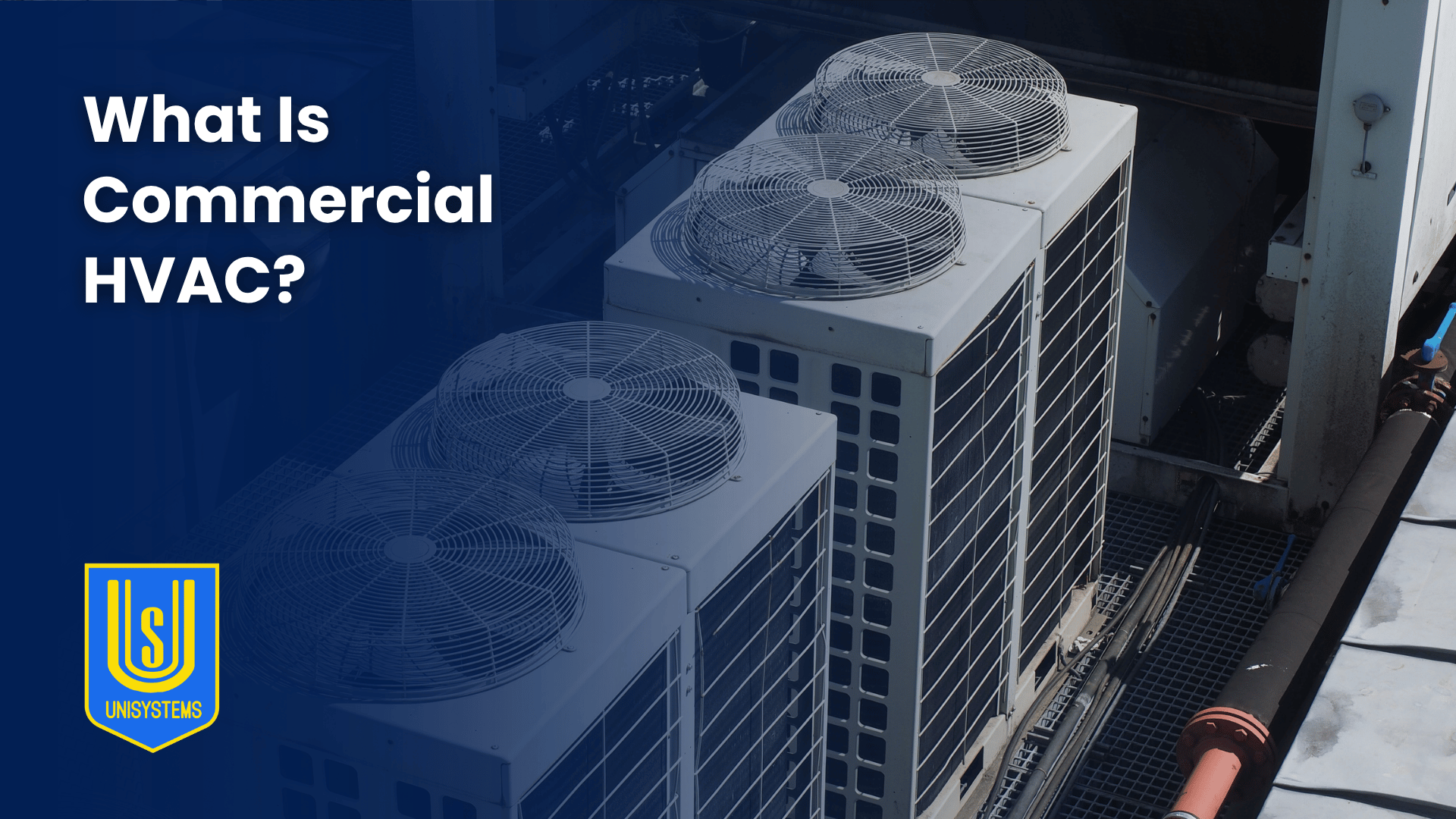
“What we see here with us is we see a commercial rooftop unit. This is usually the case with commercial buildings. Instead of each unit or each home having its own gas furnace or air conditioner, they will have one package unit per floor or per tenant space.”
These rooftop units are common because they save indoor space, provide easier service access, and can be designed to handle larger heating and cooling loads. Depending on the building, commercial HVAC systems may also include packaged units, split systems, chillers, boilers, pumps, ventilation equipment, ductwork, refrigerant-based cooling equipment, and advanced control systems.
How Commercial HVAC Systems Support Daily Operations
A well-designed commercial HVAC system helps a building run smoothly. In an office, it can reduce temperature complaints and keep employees comfortable throughout the workday. In retail spaces, it can help customers feel comfortable enough to stay longer. In industrial environments, HVAC can support worker safety, equipment performance, and process requirements.
Commercial HVAC is about balancing comfort, performance, and energy use. A system that is too small may struggle during peak demand. A system that is too large may cycle too often, waste energy, and wear out faster. Proper system design, installation, and maintenance help improve efficiency, reduce strain on equipment, and extend system life.
As Paul notes about commercial packaged units:
“These units, they are very good at heating or cooling the whole space very quickly and efficiently.”
That efficiency is especially important in buildings with long operating hours, changing occupancy levels, and multiple areas with different comfort needs.
The Importance of Ventilation and Air Quality
Commercial HVAC systems are not only responsible for temperature. Ventilation is a major part of building comfort and safety. A proper system brings in fresh outdoor air, removes stale air, controls humidity, and helps maintain better indoor air quality.
In commercial buildings, ventilation needs can change throughout the day. A busy office, restaurant, school, or retail space may require more fresh air during peak occupancy. Warehouses and industrial spaces may need ventilation to manage heat, fumes, dust, or equipment-related air quality concerns.
This is why commercial HVAC systems are often more complex than residential systems. They must respond to building use, occupancy, weather, equipment loads, and comfort expectations.
Key Parts of a Commercial HVAC System
Every building has different requirements, but most commercial HVAC systems include several important components:
- Heating equipment, such as boilers, furnaces, heat pumps, or electric heat
- Cooling equipment, such as rooftop units, chillers, air conditioners, or packaged systems
- Ventilation equipment to move, exhaust, and refresh air
- Ductwork and piping to distribute air or water throughout the building
- Filters, dampers, valves, sensors, and pumps that support system performance
- Controls and thermostats that manage schedules, temperatures, zones, and occupancy
The control system is especially important in commercial buildings. Modern HVAC controls can help property managers monitor performance, adjust schedules, reduce wasted energy, and identify problems before they become major breakdowns.
Even when the main equipment is in good condition, poor controls or incorrect settings can lead to comfort problems and higher utility bills. Something as simple as a clogged filter, low refrigerant, worn belt, failing pump, or bad sensor can cause the larger system to work harder than it should.
Why Commercial HVAC Maintenance Matters
Commercial HVAC systems are a major investment. Regular maintenance helps protect that investment by reducing unexpected breakdowns, improving performance, and controlling long-term costs.
Preventive maintenance can help identify issues such as:
- Dirty coils
- Blocked filters
- Loose electrical connections
- Worn belts
- Poor airflow
- Refrigerant issues
- Failing motors or pumps
- Control system problems
- Unusual noises or vibration
When equipment is clean, calibrated, and operating properly, it usually uses less energy to produce the same heating or cooling output. For businesses with multiple rooftop units or larger mechanical systems, even small efficiency improvements can add up over time.
Maintenance can also extend the life of your equipment. Replacement is not always the first or best answer. In many cases, targeted repairs, adjustments, or phased upgrades can keep a system operating reliably while helping owners plan for future budgets.
However, if a unit is outdated, inefficient, unreliable, or no longer suited for the building’s needs, new installation may be the better long-term solution. A qualified commercial HVAC provider can inspect the system and recommend practical next steps.
When to Call UniSystems HVAC
If your building has uneven temperatures, rising energy costs, noisy units, weak airflow, frequent repairs, or ongoing comfort complaints, it may be time to speak with a commercial HVAC specialist.
Commercial HVAC work requires technical knowledge, safe working practices, and an understanding of how business buildings operate. The best solution is not always obvious from the outside, which is why working with experienced technicians matters.
UniSystems Heating and Air Conditioning supports commercial clients with HVAC maintenance, repair, installation, system assessments, and practical recommendations. Whether you manage a single office, a busy facility, or a complex building with multiple systems, the team can help evaluate your equipment and recommend the right path forward.
As Paul says:
“If you have any questions about your building’s HVAC, give us a call. We’d love to answer any question that you guys have.”
For any commercial building, comfort, efficiency, and reliability start with the right HVAC partner. UniSystems HVAC is ready to help keep your systems working safely, efficiently, and dependably.