Your furnace filter may be out of sight, but its impact on your home’s comfort and indoor air quality is impossible to ignore. A clean, properly installed filter helps your HVAC system circulate air efficiently, capture airborne particles, and maintain consistent temperatures throughout your living space. However, before you can clean or replace it, you need to know where to look.
If you have ever wondered, “Where is my furnace filter?” you are not alone. Its location can vary depending on your furnace design, air handler configuration, and ductwork layout. Some filters are easy to find near the furnace, while others are tucked behind a return grille or inside a dedicated filter slot. Understanding these locations can make routine filter maintenance much easier.
In this guide, Unisystems HVAC explains where furnace filters are commonly located, how to identify the correct filter direction, and what homeowners should know before replacing one.
Where Is My Furnace Filter Located? Start Near the Furnace
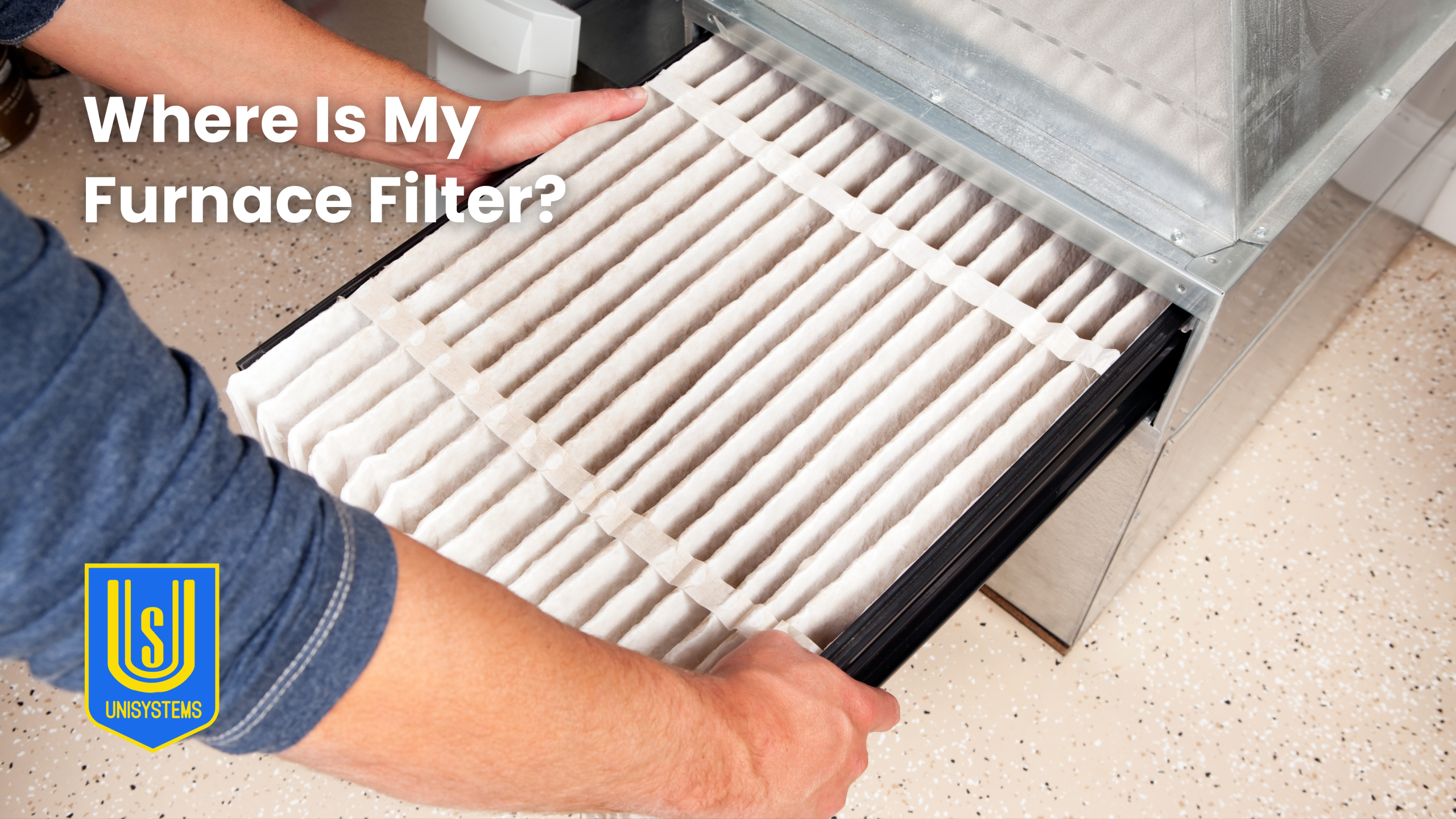
One of the most common places to find a furnace filter is near the furnace itself. In many homes, the filter sits inside a narrow filter slot located along the return air duct, usually close to where the duct connects to the furnace.
Start by examining the area around your furnace cabinet. Look for a rectangular opening, a removable metal cover, or a small compartment designed to hold the filter. Some systems have a clearly visible slot, while others use a panel that must be removed to access the filter.
Your furnace filter is generally positioned before the air reaches the blower. This placement allows the filter to capture dust, pet hair, and other airborne particles before they enter sensitive HVAC components.
If you cannot immediately find the filter, check your furnace owner’s manual. The manufacturer’s instructions often include a diagram showing the filter location and recommended size.
Unisystems HVAC recommends identifying the filter location before attempting replacement. This simple step helps prevent unnecessary handling of furnace components.
Check the Air Handler for a Hidden Filter Slot
Not every furnace has an easily accessible filter compartment. In some HVAC configurations, the filter is installed inside or directly beside the air handler.
The air handler is an important part of your heating and cooling system. It houses components responsible for moving conditioned air through your home’s ductwork. Depending on the equipment design, the filter may be positioned in a dedicated cabinet attached to the unit.
Look for a narrow opening near the return duct connection. It may have a removable cover, sliding panel, or metal door that conceals the filter slot. In certain systems, the filter slides into a compartment inside the air handler itself.
Before opening anything, turn off the HVAC system using its thermostat or designated power switch. Never force a panel that appears secured or unfamiliar.
If the filter is not visible, consult the equipment documentation rather than removing random furnace panels. Unisystems HVAC can also help homeowners identify less obvious filter locations and understand their system’s maintenance requirements.
Look Behind the Return Vent or Return Grille
Another common location for a furnace filter is behind a return vent. Unlike systems with filters near the furnace, some HVAC designs place the air filter directly behind a return grille inside the home.
A return vent draws indoor air back into the HVAC system so it can be filtered, heated, or cooled before circulating again. These grilles are usually larger than standard supply vents and are often installed on walls, ceilings, or floors.
To check this location, look for a grille with visible hinges, screws, or clips. Some return grilles open easily, while others require a screwdriver to remove their fasteners.
If a filter is installed behind the grille, you should see it sitting inside a frame or holder. Pay attention to how it fits before removing it because this will help you install the replacement correctly.
Not every return vent contains a filter. Some homes have a single central filter near the furnace, even when several return grilles are present. Installing extra filters without understanding the system’s design can restrict airflow.
If you are unsure which return grille contains the filter, checking your HVAC documentation or contacting a professional is a sensible approach.
Understand How the Return Air System Helps You Find the Filter
Understanding how return air works makes locating your furnace filter much easier.
Your HVAC system follows a continuous airflow process. Air from different rooms enters the return ducts through return grilles. It then travels toward the furnace or air handler, passes through the filter, and moves across the equipment’s heating or cooling components.
The blower circulates this air through the supply ducts and sends it back into your living spaces.
Because the filter protects the equipment from airborne debris, it is usually installed somewhere along the return side of the system, before the blower.
This gives you a useful way to narrow down your search. Instead of checking every vent in your home, follow the return duct toward the furnace and inspect the areas where a filter compartment could be installed.
Unisystems HVAC encourages homeowners to understand this basic airflow arrangement because it makes routine inspections more straightforward and helps prevent incorrect filter placement.
Check the Arrow on Your Furnace Filter Before Replacing It
Finding the filter is only half the job. You also need to install it in the correct direction.
Most disposable furnace filters have an arrow printed on the cardboard frame. This arrow indicates the direction of airflow through the filter. It is not simply a decorative marking or an indication of which side should face outward.
In a typical furnace installation, the arrow should point toward the furnace or air handler, following the direction of the moving air.
For example, if your filter is installed in a return air duct immediately before the furnace, the arrow should point toward the furnace. If it sits behind a return grille, the arrow generally points away from the room and toward the duct opening.
Installing a filter backward can affect how certain filters perform and may interfere with their intended airflow characteristics.
Before removing the old filter, take a moment to observe its orientation. If the arrow is difficult to see, look for airflow markings on the replacement filter or refer to the manufacturer’s instructions.
The correct filter direction helps your HVAC equipment operate as intended.
Identify the Correct Filter Size and MERV Rating
Once you find the filter, check its dimensions before purchasing a replacement. Using the wrong filter size can leave gaps around the cardboard frame, allowing unfiltered air to bypass the filter.
Most filters display their dimensions on the frame. Common sizes include 16 x 20 x 1 inch, 16 x 25 x 1 inch, and 20 x 25 x 1 inch. However, these are only examples, and your system may require a different size.
Look for the following information:
- Length and width: These measurements determine whether the filter fits the opening.
- Thickness: Common options include one-inch and thicker filters, depending on the equipment.
- MERV rating: This indicates how effectively the filter captures particles of different sizes.
- Manufacturer recommendations: Your furnace documentation can help identify compatible filter types.
A higher MERV rating does not automatically mean a better choice for every furnace. Some high-efficiency filters create greater airflow resistance, particularly when the system is not designed to accommodate them.
Unisystems HVAC recommends choosing an air filter that balances filtration performance with the airflow requirements of your equipment.
How Often Should You Change Your Furnace Filter?
Finding your furnace filter makes regular maintenance easier, but knowing when to replace it is equally important.
A dirty filter can collect dust, pet hair, pollen, and other particles over time. As debris accumulates, airflow may become restricted, forcing the blower to work harder to move air through the system.
The replacement schedule depends on the filter type, household conditions, and how frequently your HVAC equipment operates.
As a general guideline:
- One-inch disposable filters: Check monthly and commonly replace every 1 to 3 months, depending on conditions.
- Thicker pleated filters: These may last several months, but always follow the manufacturer’s recommendations.
- Homes with pets: More frequent inspections may be necessary because pet hair and dander can accumulate quickly.
- Homes with heavy dust or frequent HVAC use: Check filters regularly and replace them when visibly dirty or as recommended.
These timeframes are general estimates rather than fixed rules. A filter can become dirty sooner in a busy household or last longer in a cleaner environment.
Regular filter maintenance supports better airflow and helps protect important HVAC components. Unisystems HVAC encourages homeowners to make filter inspections part of their seasonal home maintenance routine.
What If You Still Cannot Find Your Furnace Filter?
Sometimes, locating the filter is not as simple as opening the furnace cabinet or checking the nearest return grille. Older systems, custom ductwork, and different equipment configurations can make the filter location less obvious.
If you have checked the return duct, air handler, furnace cabinet, and accessible return grilles without finding it, avoid taking apart the system to continue searching.
Instead, review your equipment manual for the exact model number and filter installation instructions. You can also inspect the exterior of the furnace for labels or diagrams that identify the filter compartment.
If the system has a separate media filter cabinet, its location may be slightly farther from the furnace than expected. Some HVAC systems also use specialized filtration arrangements that require professional attention.
A trained technician can inspect the equipment, identify the correct filter location, and determine whether the existing filter is suitable for the system.
Unisystems HVAC can help homeowners address these questions while checking for other issues that may affect heating performance and airflow.
Contact Us
A furnace filter may be a small component, but it plays a major role in protecting your heating system and maintaining comfortable indoor conditions. Knowing where it is located, choosing the correct size, following the airflow arrow, and replacing it when necessary can make everyday HVAC maintenance much easier.
However, filter maintenance is only one part of keeping your equipment in good working condition. If you cannot locate the filter, notice unusual airflow, or suspect your system needs attention, professional guidance can help you avoid unnecessary problems.
A comfortable home starts with clean air and a well-maintained HVAC system. Contact Unisystems HVAC for professional assistance with your heating and cooling needs. Their team can help you understand your equipment, address maintenance concerns, and keep your HVAC system operating reliably throughout the year.