Replacing an HVAC system is a major decision, and most people do not want to do it too early. At the same time, waiting too long can lead to higher costs, repeat breakdowns, and uneven comfort.
The honest answer is that there is no single date on the calendar that tells you the perfect time. Age matters, but so do performance, repair history, energy use, installation quality, and how well the equipment has been maintained. Unisystems HVAC helps homeowners look at the full picture before recommending the next step.
Signs you need a professional look
One of the first warning signs is comfort that no longer feels consistent. If some rooms are too warm, others are too cold, and the thermostat never seems to satisfy the home, the equipment may be struggling. This does not always mean replacement is required, but it does mean the system deserves attention.
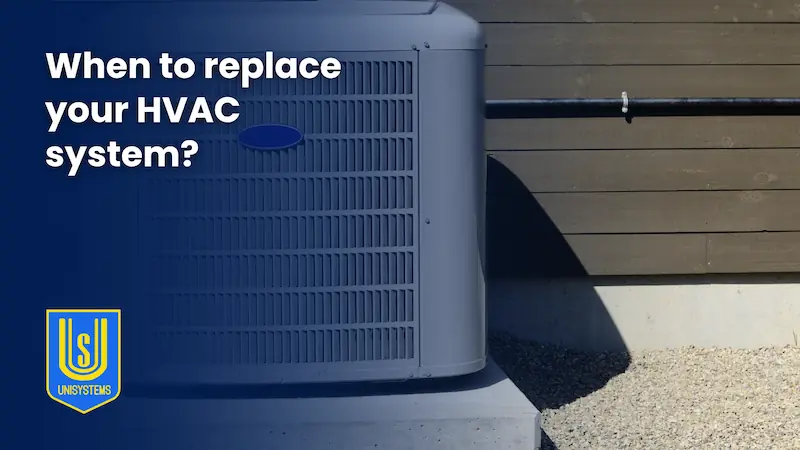
Paul puts it simply: “A really good question that I get asked is, when is it time to replace my HVAC system?” That question usually comes up after a homeowner has noticed a pattern, not just one small issue.
Watch for longer run times, weak airflow, frequent cycling, unusual noises, and humidity problems. If your system is running more often but doing less, that may point to declining performance. The same is true if your air conditioner cannot keep up during normal summer weather or your furnace seems unable to provide steady heating in colder months.
A professional assessment can help separate a simple service issue from a larger equipment concern.
HVAC replacement and replacement age
Most central air conditioner and heat pump equipment has an expected life span, but replacement age is only one factor. Some older units continue to perform well because they have received regular maintenance. Others begin having expensive issues much earlier due to poor installation, heavy use, or skipped service.
In general, if equipment is more than 10 to 15 years old and repair needs are becoming more common, it may be time to compare the cost of keeping the current unit against the value of replacement. This is especially true if major parts are failing or if refrigerant related issues are involved.
As Paul explains, “If you are seeing that you are investing a lot into repairs and service work, this may be a good tell that it’s time to replace your system.” That does not mean every repair is a bad investment. It means repeated repairs should start a larger conversation.
Unisystems HVAC can review the condition of your current unit, the history of repairs, and the way the home is performing before advising whether replacement makes sense.
Energy efficiency and comfort
Another clue is energy bills increasing without a clear reason. If your habits have not changed, but utility bills continue rising, the HVAC system may be working harder than it should. Dirt, airflow restrictions, duct issues, worn parts, and aging equipment can all contribute.
Paul notes, “If you are seeing that the energy bills have spiked,” it may be time to take a closer look. A newer HVAC system may provide better comfort while using less energy, especially when it is properly sized and installed. Many homeowners also look for Energy Star rated options when comparing equipment.
Still, the most efficient equipment on paper will not perform well if the installation is not right for the home. Sizing, duct design, airflow, thermostat setup, and commissioning all matter. That is why Unisystems HVAC focuses on evaluating the entire comfort setup, not just swapping out a box.
In some cases, maintenance or a targeted repair can restore performance. In other cases, the best way to save over time is to stop putting money into equipment that is already near the end of its useful life.
Repair costs and service history
A single HVAC repair does not automatically mean replacement. However, a pattern of hvac repairs can change the math. If you are calling for service every season, replacing expensive components, or dealing with the same problem again and again, the current equipment may no longer be the best use of your budget.
Paul says it well: “With an old system, you are constantly investing into repairs and high costs. You can put this money towards a new system that will serve you very well for the foreseeable future.”
A helpful rule is to think about the relationship between repair cost, equipment age, and future reliability. If a repair is minor and the unit is otherwise healthy, it may be worth doing. If the repair is costly and the unit is already older, replacement may offer better peace of mind.
This applies to an ac unit, a cooling system, a heat pump, or a furnace. If your heat pump struggles in both cooling and heating seasons, that is especially important because it works throughout much of the year. Air conditioner replacement may also be worth discussing if cooling performance has dropped and the equipment is nearing the end of its expected life.
Unisystems HVAC can help you compare options without pressure, including whether hvac repair still makes sense.
Talk with Unisystems HVAC
The best next step is not guessing. The best next step is having a trained professional inspect the equipment, review the home, and explain the options clearly. Your system is connected to comfort, air quality, energy use, and household budget, so the recommendation should be based on real conditions.
Paul invites homeowners to reach out directly: “If you have any questions whatsoever, feel free to give us a call. I’d love to chat with you for just a few minutes and possibly schedule an on site walkthrough to take a look at your system.”
That is the value of working with Unisystems HVAC. You get expert guidance, practical recommendations, and a clear path forward. Whether your home needs maintenance, repair, or a full replacement, the team can help you make a confident decision without giving you a one size fits all answer.
If your comfort has changed, your bills have climbed, or your equipment keeps asking for attention, contact Unisystems HVAC and schedule a professional walkthrough.